No one notices them
Most classmates won’t realize your teen is in treatment. The aligners are nearly invisible at conversational distance.


Spark Teen aligners include built-in compliance indicators, eruption tabs for incoming molars, and a treatment design that works around school, sports, and real teenage life.

It’s the first question every parent asks at the consultation. And it’s the right question to ask.
Clear aligners only work if they’re worn 22 hours a day. With teens, that’s a real consideration. Some teens are perfect candidates. Others are better served by braces, where compliance isn’t optional. We’ll tell you honestly which group your teen belongs in.
Built-in compliance indicators
Spark Teen aligners include blue indicator dots that fade as the aligner is worn. Parents can see at a glance whether their teen is on track. It’s the closest thing to a wear-time report card.
Spark Teen isn’t just smaller aligners. It’s a system designed around the realities of teen treatment: incoming molars, active growth, and the need to keep parents in the loop.
Blue dots embedded in each aligner fade with wear time. Parents can verify their teen is wearing them as prescribed without having to ask.
Teens lose things. Spark Teen plans include replacement aligners so a lost set doesn’t mean a setback in treatment.
School. Sports. Friends. Eating lunch in 20 minutes. Aligners have to work around all of it, not the other way around.

We’re as careful about who we recommend aligners for as we are about how we design them. Here’s how to think about whether your teen is the right fit.
Good Fit
Braces May Be Better


For a lot of cases, yes. For some, no, and that’s worth saying plainly. Aligners handle crowding, spacing, and most alignment issues well. Certain bite corrections and rotations are still more predictable with brackets. The other variable is wear time, because an aligner sitting in a backpack isn’t moving anything. Dr. Varble makes that call case by case instead of defaulting to one system.
It’s the right question, and it’s the main thing that determines whether aligners are a good fit for your kid. Spark Clear Aligners need to be in for most of the day, out for meals and brushing. Some teens handle that without a single reminder. Others do better with brackets that never come out, and there’s nothing wrong with that being the answer. Dr. Varble would rather have the honest conversation at the consultation than start a treatment that stalls.
Sports, yes, and aligners are often simpler than brackets for contact sports because they come out and a mouthguard goes in. Wind instruments take a brief adjustment period, and most players settle in quickly. Mention it at the consultation if your teen plays. It’s the kind of detail that can shift which option Dr. Varble recommends.
It happens, usually at a restaurant. Call the office. Depending on where your teen is in the sequence, Dr. Varble may have them move to the next tray early or go back to the previous one while a replacement is on the way. The important part is calling instead of waiting it out, because a gap in wear time is what pushes a finish date back.
Most VO patients use DentalMonitoring. Your teen scans their teeth at home with a phone each week and Dr. Varble reviews every scan, so if a tooth isn’t tracking the way it should, he sees it in days rather than at the next appointment. It also means fewer drives to Creve Coeur or St. Peters. On average it cuts in-office visits by about half, though schedules vary by case.
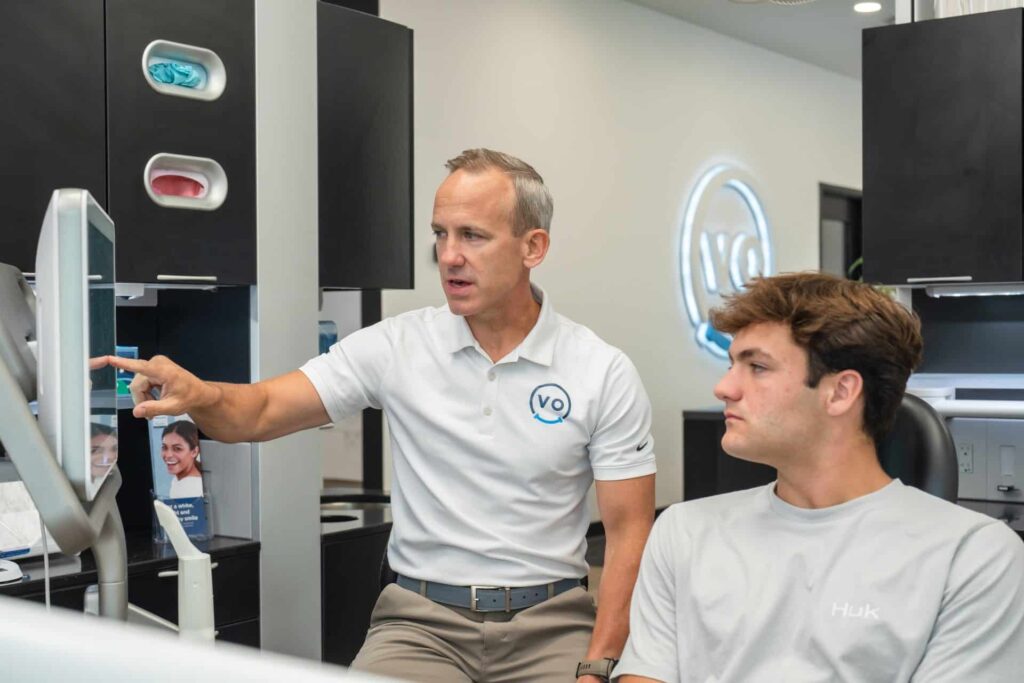
Prom is around the corner. Maybe it’s homecoming, a quinceañera, a wedding, or a family…

You just got braces. Or maybe your kid just got braces, and now you’re both…
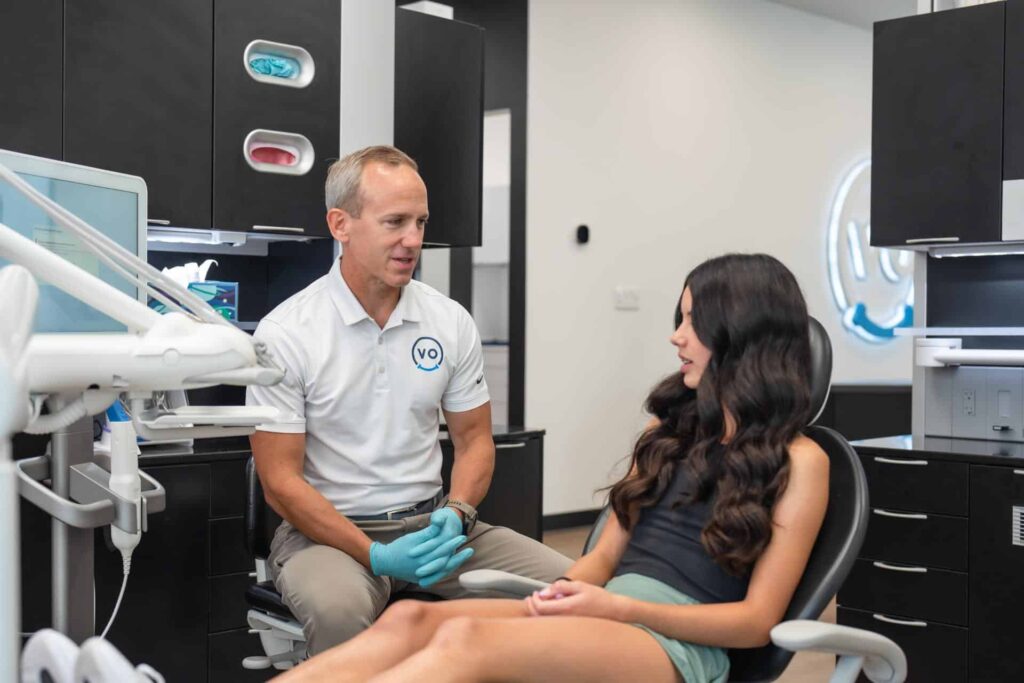
If you’ve been researching braces for yourself or your child, you’ve probably come across the…
Your free VO Smile Assessment includes a 3D scan, and a custom treatment plan from Dr. Varble. No pressure, no commitment.

